Part 2 - What a Billionaire's Checklist Can Teach Us About Fixing Net Zero: Charlie Munger's 25, Updated for 2026
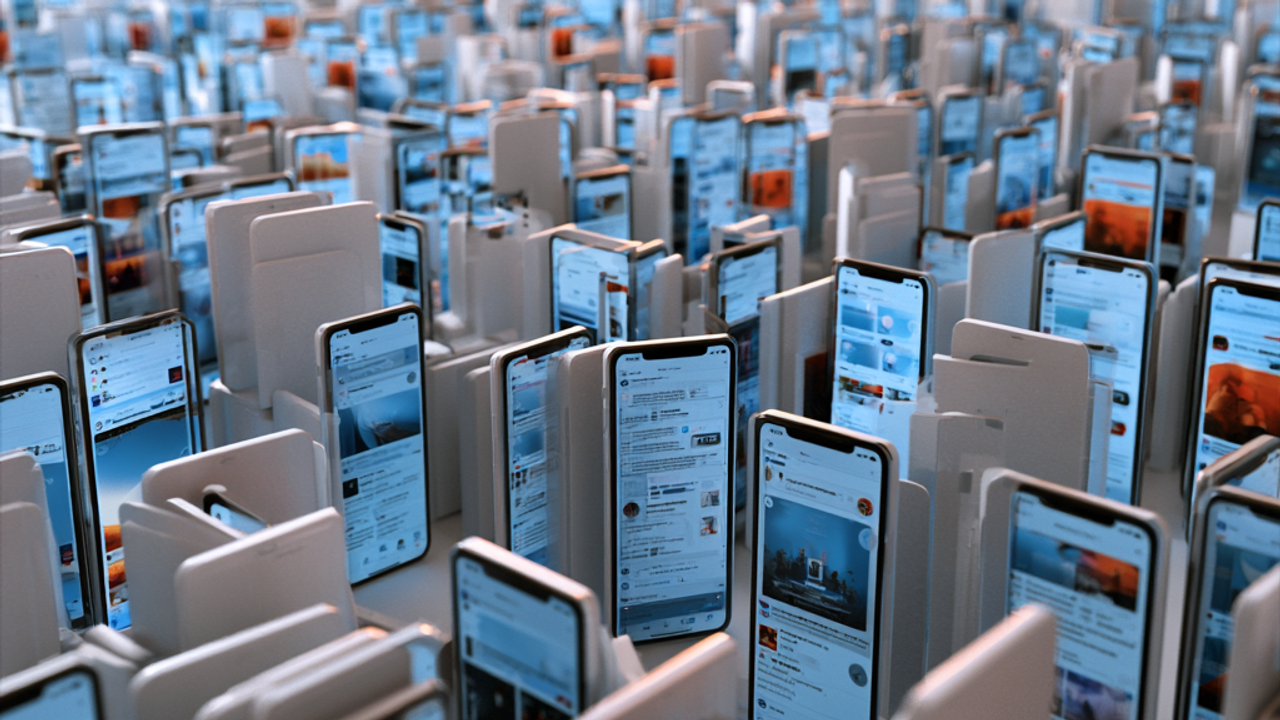
Charlie Munger wrote his "25 Standard Causes of Human Misjudgment" in 1995 and revised it in 2005, laid out in full in the first article of this series. He was thinking about investors, boards, and salesmen. He was not thinking about an algorithm that learns a person's emotional triggers in real time and feeds them more of whatever keeps them scrolling.
That is the update this article works through: taking the same 25 tendencies and updating how they apply to a world of smartphones, engagement-ranked feeds, and a political landscape increasingly organised around identity rather than policy. This is a shift in use, not a correction of Munger's original work.
Munger's 25 tendencies remain the right map of how human judgment fails. What has changed is the terrain. Several of Munger's minor, occasional tendencies have gone from rare events to daily, industrial-scale forces acting on almost everyone, several times an hour.
The point of this update is practical, not academic. Once these changes can be seen operating in real time, and in what combination, it is easier to understand what is going on. This is the foundation the rest of this series builds on when it turns to net zero specifically in the next article.
Munger's original 25 causes are kept fully intact below. What changes is the ranking: they are reordered by how much force each one carries in a world of feeds, notifications, and modern identity politics, drawing on modern behavioural research alongside Munger's own book to justify the reordering. Old Munger numbering is shown in brackets for cross-reference against the original list in article one.
The 25, reordered for 2026
1 (15). Social-Proof Tendency. Used to mean watching what the crowd does. Now it is a precise, visible number under every post: likes, shares, follower counts, retweets. Research on visible virality metrics shows people use these numbers as a direct substitute for judging quality or truth themselves, and that this effect is engineered by platform design, not incidental to it (Conzo et al., 2023; Sundar et al., 2018). This has gone from an occasional social pressure to a constant, quantified one.
2 (1). Reward and Punishment Superresponse Tendency. Munger's original point, that incentives drive behaviour, now runs an entire industry. Engagement-ranked feeds are literally reward systems trained to maximise watch time and reaction, and outrage and moral condemnation are the most efficiently rewarded content types (Vosoughi, Roy & Aral, MIT/Science, 2018; Milli et al., 2023). The incentive is not subtle anymore, it is the entire business model.
3 (14). Deprival-Superreaction Tendency. Loss aversion used to mostly show up around money and possessions. It now organises entire movements around the fear of losing relative status, cultural centrality, or group standing, a much larger and more combustible target than a wallet (Mutz, PNAS, 2018; loss-framed group politics research, Wiley).
4 (18). Availability-Misweighing Tendency. Munger meant vivid anecdotes beating dry statistics. The modern version is a feed that has algorithmically selected the single most emotionally extreme example of any given issue and shown it first, every time, all day. What is available to the mind is now curated by a machine optimising for reaction, not by chance.
5 (3). Disliking/Hating Tendency. Once mostly personal, a colleague or a rival. Now industrialised into affective polarisation, where people distrust and dislike the entire opposing political tribe more intensely than they dislike other racial or social out-groups (Iyengar & Westwood, Stanford, 2015). This is arguably the single most measurable change in the last 20 years of human psychology at population scale.
6 (2). Liking/Loving Tendency. The mirror image of tendency five. Party and tribe have become what political scientist Lilliana Mason calls a mega-identity, so liking one's own side is no longer really about agreeing with them on policy, it is identity protection wearing the costume of political opinion (Mason, Uncivil Agreement, 2018).
7 (11). Simple, Pain-Avoiding Psychological Denial. Bigger and more communal than Munger described. Entire online communities now co-produce denial together, reinforcing each other's refusal to accept an uncomfortable fact in real time, a very different and much stickier phenomenon than one person quietly lying to themselves.
8 (10). Influence-from-Mere-Association Tendency. Munger's Persian Messenger Syndrome is now automated. Content is algorithmically associated with a person's existing feed, friends, and politics, long before it has been evaluated on its own merits. The association does the persuading before conscious thinking has even started.
9 (5). Inconsistency-Avoidance Tendency. Public commitment used to happen occasionally, in speeches or contracts. Now it happens permanently, every time someone posts an opinion, which means reversing a stated view carries a much higher social cost than it used to, because there is a searchable record and an audience watching for hypocrisy.
10 (22). Authority-Misinfluence Tendency. The authorities have changed but the tendency has not weakened. Influencers, algorithm-boosted experts, and viral threads now carry authority that used to require credentials or institutional standing, and platforms actively reward whoever looks confident, regardless of accuracy.
11 (7). Kantian Fairness Tendency. The modern political internet runs on perceived unfairness. Almost every viral political post is, underneath, a fairness claim, that someone got away with something or someone was treated unjustly, exactly the emotional trigger this tendency is built to respond to.
12 (17). Stress-Influence Tendency. Munger described occasional high-stress decisions. Doomscrolling and constant notification-driven attention fragmentation now put a low, chronic version of this stress response into daily life for enormous numbers of people, degrading judgment quietly rather than dramatically (Shabahang et al., 2024; notification disruption research, PsyPost, 2026).
13 (16). Contrast-Misreaction Tendency. Political and cultural claims are now almost always presented in the most extreme available contrast, the worst example of the other side against the best example of one's own, because contrast content outperforms nuanced content in every engagement metric platforms track.
14 (20). Drug-Misinfluence Tendency. Reframed for the smartphone era: notification and like-driven checking behaviour runs on the same variable-ratio reward schedule B.F. Skinner identified as maximally addictive, and neuroimaging now shows measurable dopamine-pathway involvement specific to social app use (striatal dopamine study, PMC, 2021). Not a chemical dependency, but a behaviourally engineered one with similar mechanics.
15 (8). Envy/Jealousy Tendency. Curated highlight-reel feeds, other people's homes, holidays, bodies, and success, turn ordinary social comparison into a constant, algorithmically delivered drip of envy triggers, at a volume and frequency no prior generation experienced.
16 (9). Reciprocation Tendency. Still operates as Munger described, but now scaled into pile-ons online, reciprocating hostility in kind is instant, public, and rewarded with likes from bystanders who are reciprocating the original reciprocation.
17 (12). Excessive Self-Regard Tendency. Public platforms reward confident, simplified takes over careful, hedged ones, which selects for and reinforces overconfident self-presentation as a communication style, whether or not the person is actually more certain underneath.
18 (13). Overoptimism Tendency. Still real, but less central to why discourse breaks down specifically. It matters more for how people and institutions frame their own progress than for why arguments turn hostile.
19 (23). Twaddle Tendency. Modern content feeds are twaddle at industrial scale, an infinite supply of trivial, algorithmically generated chatter that displaces attention from anything that actually requires sustained thought.
20 (24). Reason-Respecting Tendency. Still functions as Munger described, that people comply more readily when given any reason, even a weak one, but weaponised: a single plausible-sounding "because" attached to a viral claim is often enough to stop scrutiny before it starts.
21 (6). Curiosity Tendency. One of Munger's positive tendencies, and still an antidote, but algorithmic feeds now often satisfy curiosity so cheaply and passively, through infinite related content, that it stops driving people toward primary sources or harder, slower learning.
22 (19). Use-It-or-Lose-It Tendency. Relevant to the modern era mainly through outsourced thinking: if a feed or an AI system supplies conclusions constantly, the underlying skill of forming independent judgment can atrophy exactly as Munger warned, just via a different mechanism than he imagined.
23 (21). Senescence-Misinfluence Tendency. Unchanged by social media specifically, still an important individual-level tendency, but not a defining force in why modern discourse as a whole is broken.
24 (4). Doubt-Avoidance Tendency. Still real and still powerful, but less distinctive now: nearly every tendency above already resolves doubt quickly by outsourcing the decision to the crowd through social proof or the tribe through liking and disliking, so doubt-avoidance shows up mostly as a downstream effect of the others rather than as its own separate force.
25 (25). Lollapalooza Tendency. Kept last exactly as Munger placed it, because the argument of this whole update is that the modern information environment is a Lollapalooza machine: it is specifically engineered to stack several of the tendencies above in the same direction at once, which is precisely what produces outcomes such as viral outrage, tribal warfare, and mass-scale misinformation that no single tendency could produce alone.
A note on what moved and why
The tendencies that jumped up the list, social proof, reward and punishment, deprival, availability, disliking, are the ones that platform design and political strategy specifically exploit on purpose, at scale, with measurable financial or electoral incentive behind doing so. The tendencies that dropped, doubt-avoidance, overoptimism, senescence, are not less true, they are just less load-bearing for explaining why 2026-era discourse specifically has become this combustible.
The combinations that matter most
Munger's own insight was that no single tendency does the real damage. It is the stacking, the Lollapalooza effect, that produces extreme, seemingly irrational outcomes, and this is where it matters most today. Three combinations stand out as doing the heaviest lifting in modern digital and political dysfunction, and all three resurface directly in article three when this framework gets applied to net zero.
Social Proof (1/15) combined with Reward and Punishment Superresponse (2/1).
This produces the engagement economy itself. Platforms literally pay creators and reward visibility based on likes and shares, and those same likes and shares then function as social proof telling everyone else what is worth their attention. It is a closed loop with no natural ceiling. Research on social media algorithms shows this loop specifically favours anger and out-group hostility over calm content, because that is what the reward signal actually measures (Milli et al., 2023).
Disliking/Hating (5/3) combined with Deprival-Superreaction (3/14).
This produces identity-based political tribalism at its most dangerous. When disliking the opposing tribe combines with a belief that they are actively taking something away, whether status, culture, resources, or a way of life, the two tendencies compound into something far more intense than either alone, a felt sense of active loss inflicted by people already viewed negatively.
Authority-Misinfluence (10/22) combined with the Reason-Respecting Tendency (20/24).
This produces the modern misinformation "expert." A confident voice presenting as an authority, whether or not real credentials exist, combined with the simple presence of a plausible-sounding "because," is often enough to stop most people's scrutiny entirely, because both tendencies fire at once: defer to authority, and accept any stated reason as sufficient. Platforms do not verify authority, they reward confidence, which makes this combination easier to trigger without substance than it ever was face to face.
What this update is for
A few things stand out from this update that matter before it gets applied to any specific issue.
The tendencies did not change. Our exposure has. Every one of Munger's 25 causes already existed in 1995, and to be fair in 1895 as well. What has changed is frequency and intensity. A person in 1995 might trigger their deprival-superreaction tendency a few times a month, over genuinely significant losses. A person in 2026 can trigger it dozens of times a day, scrolling past manufactured status threats engineered by platforms that have run tests to find the version that provokes the strongest reaction. The biology is unchanged. The dosage is not.
Much of this is not accidental. Munger's original 25 describe tendencies that misfire as an unintended side effect of otherwise-useful mental shortcuts. Several of the modern combinations above are being deliberately engineered and commercially exploited, not just occurring naturally, which is a different, more serious problem than Munger was originally describing. It changes the response required: this is not just knowing one's own biases, it is recognising when a system is professionally engineered to exploit them and adjusting accordingly.
The value of this update is not in memorising 25 names. It is in having a fast diagnostic question ready: when an argument, a headline, or a strong personal reaction feels unusually powerful or clear-cut, which two or three of these tendencies are probably stacking to produce that feeling, and is the underlying claim actually as strong as the feeling suggests. That question is the entire point, and article three of this series puts it to direct use on the specific case of net zero and the general public.
Sources: Charlie Munger, "The Psychology of Human Misjudgment," Chapter 11 of Poor Charlie's Almanack (1995, revised 2005). Modern research drawn from MIT, Stanford, NYU, Yale, and peer-reviewed journals including Science, PNAS, and Computers in Human Behavior, cited inline above.
Ready to pressure-test your strategy?
Book a Strategy Sprint and get a clear, actionable plan for your climate venture.
Book a Strategy Sprint